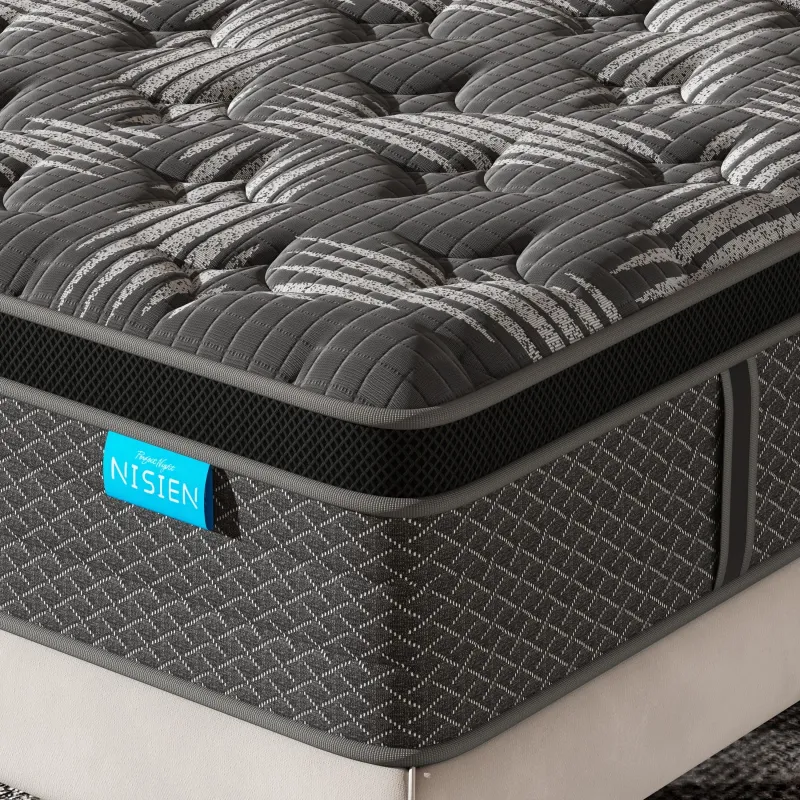
Photo Same, Bed Different: A 2026 Guide to Spotting Quiet Spec Changes in Budget Beds

You spot a bed at £199. The photo shows chunky wooden slats, a deep base and feet that look like they could survive a house move. You bookmark it. Three weeks later, a friend orders from the same link and the bed that turns up has thinner slats, a shallower base and plastic feet that flex when you lean on them. Nothing on the listing has changed. Same picture, same price, same product name. Different bed.
That's not necessarily a con. Budget ranges get revised between production batches, suppliers change, and cost engineering happens quietly in the background. But if you're spending £199 on a bed frame — or £199 on a mattress — you deserve to know what you're actually buying. Here's how to read the small print before you click buy, and what to check when the delivery van pulls up.
Why the listing photo can be years out of date
Retail photos are expensive to reshoot. A retailer might keep the same image through three or four production runs because the bed still looks broadly similar in a thumbnail. The photo becomes a mood board rather than a specification. The product name sticks around too, because changing it would mean losing reviews, search history and whatever ranking the listing has built up.
None of that is illegal. It is, however, a reason to stop treating the picture as evidence. The photo tells you the vibe. The spec sheet tells you the goods.
The spec sheet is the real product
Before ordering, find the product details tab, the downloadable specification PDF, or the 'additional information' section. If the retailer hides it, ask. You're looking for numbers, not adjectives.
For a bed base, check:
- Slat count and slat thickness — a bed can go from 14 slats at 9mm thick to 12 slats at 7mm without a word on the listing.
- Slat gap — the distance between slats matters for foam and memory-foam mattresses. A wider gap means more sag over time.
- Base board thickness — solid bases often use 18mm board, but budget revisions can drop to 12mm. That affects rigidity and how the mattress sits.
- Feet material — solid wood, metal, or hollow plastic. Hollow plastic feet are the usual culprit when a cheap bed starts creaking in month four.
- Load rating — not always published, but worth asking for if you're heavier or sharing a bed.
For a mattress, look for:
- Filling density in kg/m³ — 'high-density foam' means nothing without a number. 25kg/m³ and 40kg/m³ are not the same product.
- Spring count and gauge — a 1,000-spring mattress with thin wire can feel softer and wear faster than an 800-spring mattress with thicker gauge.
- Filling weight in gsm — useful for comparing quilted covers and comfort layers.
If the listing gives you none of this, email or use the chat window and ask. Save the reply. A written answer from the retailer is worth more than a thousand words of marketing copy.
Batch codes: the paper trail on the label
Most beds and mattresses carry a label with a batch number, product code or SKU. That code is how retailers track what came from which factory and when. Before ordering, ask which batch is currently in stock. After delivery, check the label against what you were told.
This is also where reviews become useful. If three recent reviews mention 'thinner slats than expected' or 'feet cracked', that's a batch-level clue. Sort reviews by newest and read the ones from the last three months. A listing with 4.5 stars from 2023 and a run of grumbles in 2026 is telling you something.
The five-minute pre-order check
Run through this before you pay:
- Open the spec tab and note slat count, slat thickness, base board thickness and feet material.
- For mattresses, note filling density, spring count and cover composition.
- Screenshot the listing and the price on the day you order.
- Ask the retailer to confirm the current batch spec in writing.
- Check the returns policy — especially whether assembled beds can be returned.
That last point matters. Many retailers accept returns on unassembled items but refuse once you've built the bed. If you're unsure, don't assemble until you've inspected the parts.
The doorstep audit: what to check on arrival
When the delivery lands, don't drag the boxes straight upstairs and start building. Open them. Count the slats. Measure one with a tape. Check the feet — tap them, squeeze them, see if they feel hollow. Look at the base board thickness if it's visible. Find the batch label and compare it to what you were told.
If something doesn't match, photograph everything before assembly and contact the retailer straight away. Under UK distance-selling rules you generally have 14 days to cancel an online order from delivery, and the Consumer Rights Act 2015 gives you rights if goods aren't as described. But those rights are much easier to use when the bed is still in its packaging and you have photos of the mismatch.
When a quiet swap is actually fine
Not every spec change is a downgrade. Sometimes a retailer switches to a better supplier, or a new batch uses a stronger plastic foot that looks cheaper but isn't. The point isn't to panic about every revision. It's to buy based on what's in front of you rather than what was photographed two years ago.
A £199 bed can still be a genuine bargain. Just make sure the bargain you receive is the one you agreed to buy. The picture is marketing. The spec sheet is the deal.